
The fighting knife and Liberty Tree: Timeless symbols of the Revolution
- Jim Zbick
- Jul 2
- 3 min read
Popularized by rugged folk heroes like Davy Crockett and James Bowie, the fighting knife represents the self-sufficiency and individualism of the early settlers.
Even before the arrival of those frontier pioneers, the blade was a symbol for the courage, determination and hunger for independent-minded American patriots. While having it as a weapon in close combat on the battlefield, soldiers of the Revolution also depended on their knives for critical survival tasks such as foraging for food and constructing shelters.
A knife with unique historical significance is on display in the Revolutionary War section at the Faith, Family and Country Heritage Museum in Branson West, Missouri. The 9-inch blade of hand-forged steel is engraved with the” words: “The Unanimous Declaration of the Thirteen United States of America.”



But it’s the 5-inch wooden handle with two brass stars that takes the commemorative knife to another historical level. Wood for the handle is from the last surviving Liberty Tree, a 400-year-old tulip poplar which stood on the grounds of St. John’s College in Annapolis, Md., until Hurricane Floyd brought it down in 1999. There were 1,776 commemorative knife handles made from this last surviving Liberty Tree in America and the one on display in the Branson West museum is number 628.
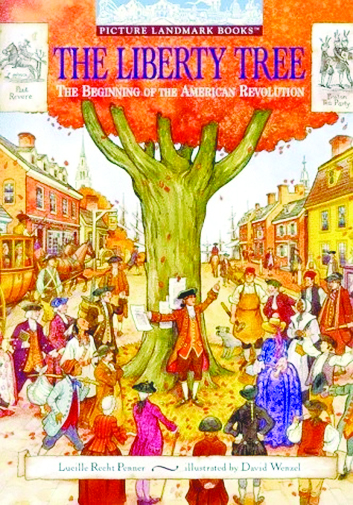
Like the fighting knives, Liberty Trees are cultural symbols of the American Revolution. The first Liberty Tree was a large elm tree located near the Boston Common. Leading up to open hostilities against English rule in the Revolution, the Sons of Liberty, a secret society of men who advocated for the rights of colonists, would meet at the tree and stage protests to British taxation and rule.
The Liberty Tree continued to be a place for protests and public displays throughout the 1760s and 1770s as a symbol of objection to British policies. On August 14, 1765, a band of discontented artisans and merchants hung a British effigy in the tree to protest the Stamp Act and after it was repealed the next year, citizens of Boston gathered at the Liberty Tree and hung lanterns in the branches in celebration.
A copper sign fastened to the tree stated: “This tree was planted in the year 1646, and pruned by order of the Sons of Liberty, Feb. 14th, 1766.” It continued to serve as an important place to demonstrate opposition to British actions until August, 1775, when the tree was cut down by British troops.
In 1825, during his triumphant tour of America, the Marquis de Lafayette, the heroic French officer who joined the patriot cause, proclaimed to the citizens of Boston that “the world should never forget the spot where once stood Liberty Tree, so famous in your annals.”
During the War of Independence, other trees sprung up throughout the colonies where colonists met to protest, give speeches, and hang messages related to their cause. When Loyalists to the British crown would tear down these symbols, the rebels would simply put them up again.
Thankfully, through two-and-a half centuries, the genetics of the original tree live on. Historic descendants and seedlings grown from cuttings are thriving after being actively planted across the United States. To honor and remember the nation’s history in 1976, some 1,200 ancient trees that were still standing during the nation's founding were christened as official state Liberty Trees.
Descendants of the original Liberty Trees can be found throughout the Show-Me State.
A plaque outside Wilderness Church in Branson’s Silver Dollar City gives a brief history of the Liberty Tree, ending with the proclamation: “Upon this site stands the 16th descendent of the last original Liberty Tree. It is dedicated to all past, present, and future Patriots who support and crusade for the continued Liberty of our great United States of America.”


Comments