
Branson West museum receives flag that flew over U.S. Capitol

BY JIM ZBICK, Branson West Museum Director and Curator
Exactly 25 years after one of the most tragic and somber days in the nation, a repository for American history in Branson West received a special award that is a global symbol of American freedom.
Through the efforts of Congressman Eric Burlison’s office, the Faith, Family and Country Heritage Museum received a flag that once flew over the U.S. Capitol in Washington D.C.
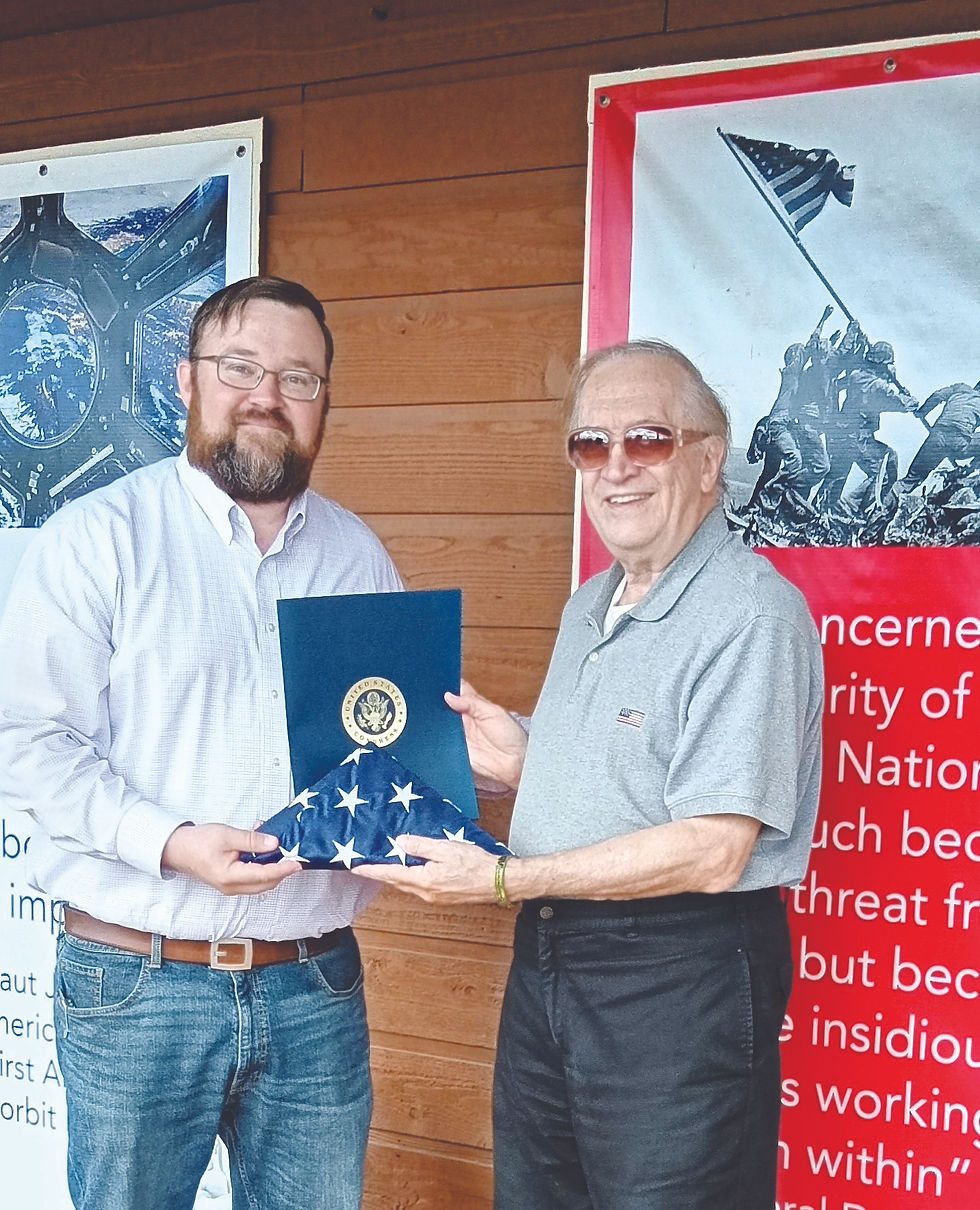
Jim Zbick, director and curator, said the timing of the flag presentation added to the significance of the congressman’s gift.
“The fact that this flag arrived almost to the minute 25 years after the 9/11 attacks makes it extra special,” Zbick told Jared Taylor, Field Representative for Burlison’s district office.
With over 540 rooms, the U.S. Capitol is said to embody the ideals and history of the Republic, and the impressive iron dome is a global symbol of American democracy and representative government.
Former California Congressman Kevin McCarthy had not yet been elected to public office when the 9/11 attacks occurred. His first election to the California State Assembly came the following year in 2002. After becoming a U.S. Congressman five years later he realized the importance of serving in the hallowed halls of Congress.
“There's a staircase on the first floor of the Capitol that I walk every day,” he said. “It's made of marble, and as you walk those steps, you think of those who've walked before you. You think of the challenges that the country's faced.”
The issue of slavery during the 1850s was one of those challenges that divided an earlier Congress, and that crisis reached a boiling point for war when senators and representatives of the states which had seceded from the Union, resigned from Congress and left Washington.
During that time of disunion, work on the Capitol’s massive iron dome that weighs nearly 9 million pounds was halted in 1861, but that did not deter President Abraham Lincoln’s determination to forge ahead and complete the dome project with its 19-foot bronze figure representing freedom.
When one visitor asked how he justified continuing construction of the Capitol when the nation was at war, Lincoln answered, “If the people see the Capitol (work) going on, it is a sign that we intend the Union shall go on.”
That kind of resolve by Washington leadership was seen and felt again by Americans 140 years later when the nation was attacked by global terrorists on 9/11 in 2001. Shortly after two hijacked planes brought down the World Trade Center in Lower Manhattan and another struck the Pentagon, the U.S. Capitol was evacuated when a fourth hijacked plane, supposedly bound for Washington D.C., crashed in a field outside of Shanksville, Pa.
Later that evening, about 150 members of Congress returned to the Capitol to stand and sing “God Bless America” on the steps of “The People’s House.”


Comments